Playmaker
A “LinkedIn” for lower-league soccer players, coaches, scouts, and the entire football community.
Goal
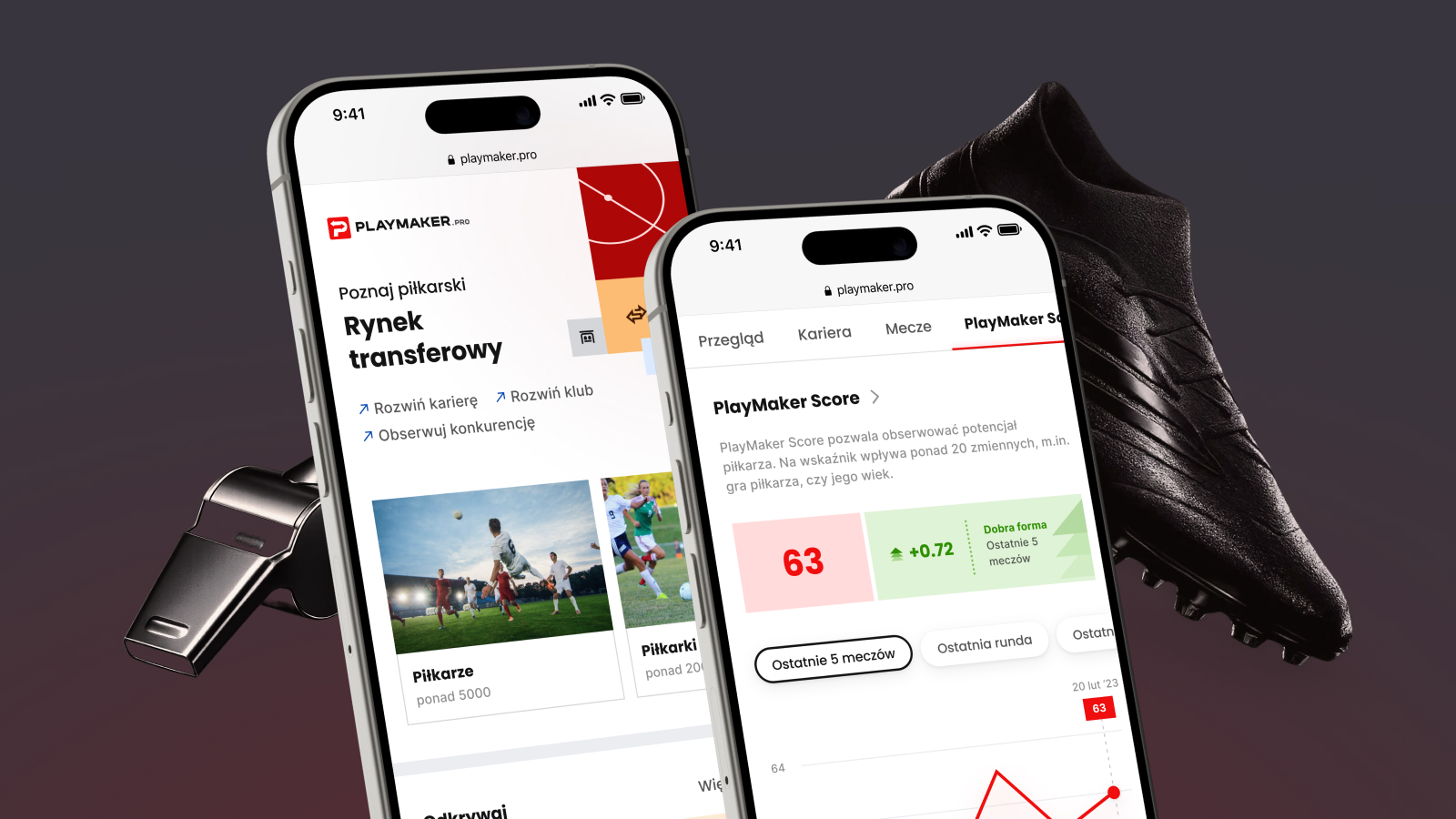
My main task was to redesign the entire platform based on a redefined business model, working closely with UX Designers on a new application architecture.
The first step was to develop a new brand identity—one that would help the product stand out from the competition, withstand the test of time, and reflect its long-term ambitions.
To support those goals, I recommended building a robust UI Kit—marking the foundation of what would later evolve into a simple but effective Design System.
About the product
Playmaker is a platform that connects soccer players, coaches, club staff, scouts, local organizers, fans, and even parents of young aspiring athletes.
It focuses on lower-tier leagues—meeting the unique, fast-changing demands of a market that’s less closed-off and more dynamic than top-tier professional football.
The app and platform aim to help players get noticed, and clubs to find new talent—closing the loop both ways. It’s also the perfect place to build a club roster, or to follow your favorite players as a fan
Rebranding
To build a strong and distinct brand identity, I led a workshop using the “Six Thinking Hats” method. This helped us critically assess every aspect of the brand, reaffirm what we already knew, and surface what had previously gone unnoticed.
I then moved into ideation, creating multiple versions of the visual identity—including logos and usage examples. We chose one direction and built a preliminary brand book, along with social media templates.
The logo is built around the letter “P,” the most recognizable element of the brand name. The arrow extensions represent movement—signifying transfers, growth, change, and the dynamic energy that defines sport.
Redesign & product rebuild
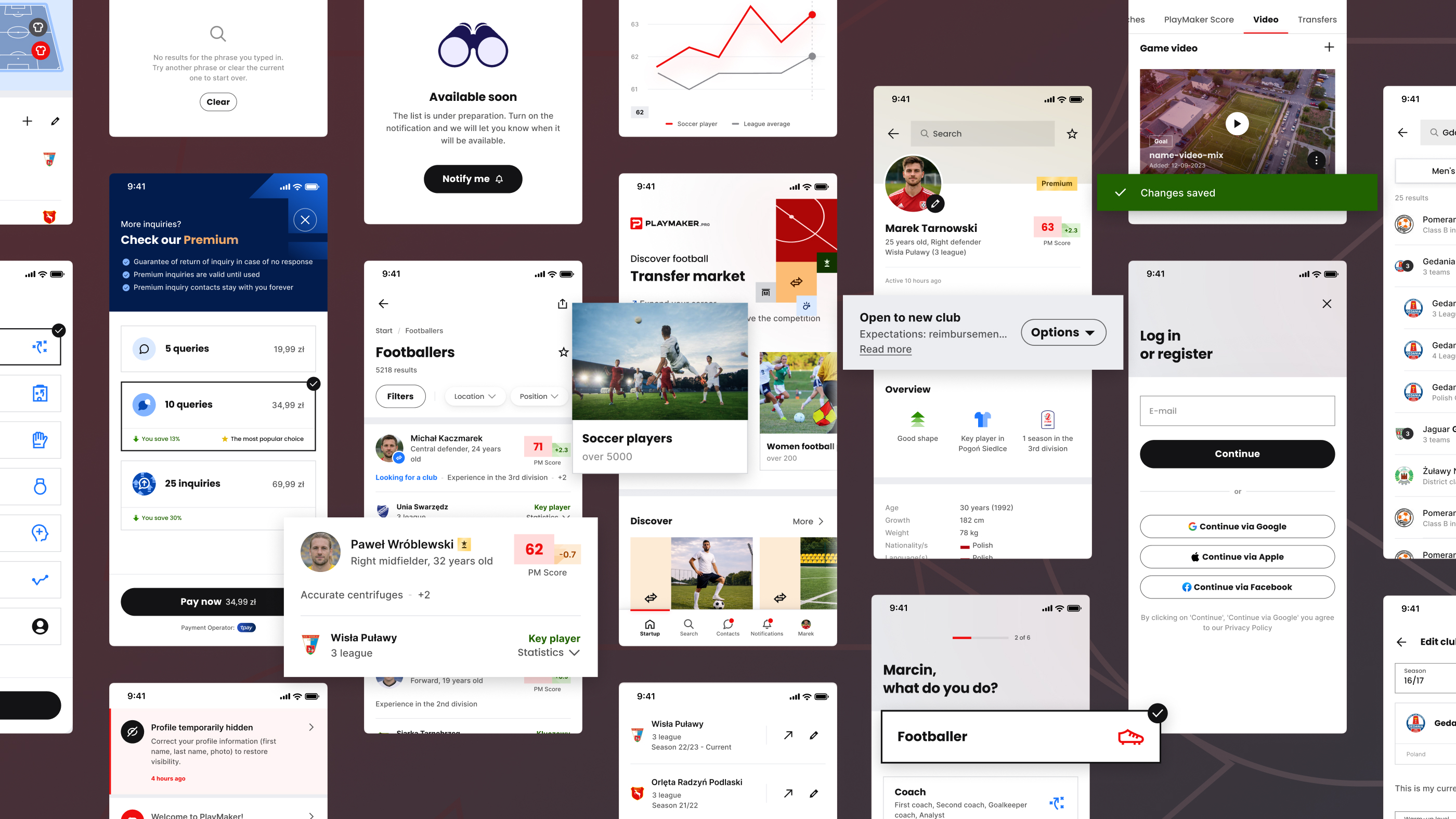
One of the biggest challenges post-rebranding was to create a completely new visual layer for the product’s UI—aligned with the rebuilt information architecture and refined features. This redesign allowed the brand to jump from a “4th-league” experience straight into the “first league.”
A key factor throughout the year-long work was collaboration across multiple, interconnected roles:
- UX designers
- Brand stakeholders
- Frontend and backend developers
Daily communication, shared challenges, and the professionalism of everyone involved led to a product that today serves a growing base of active users.
From UI Kit to Design System
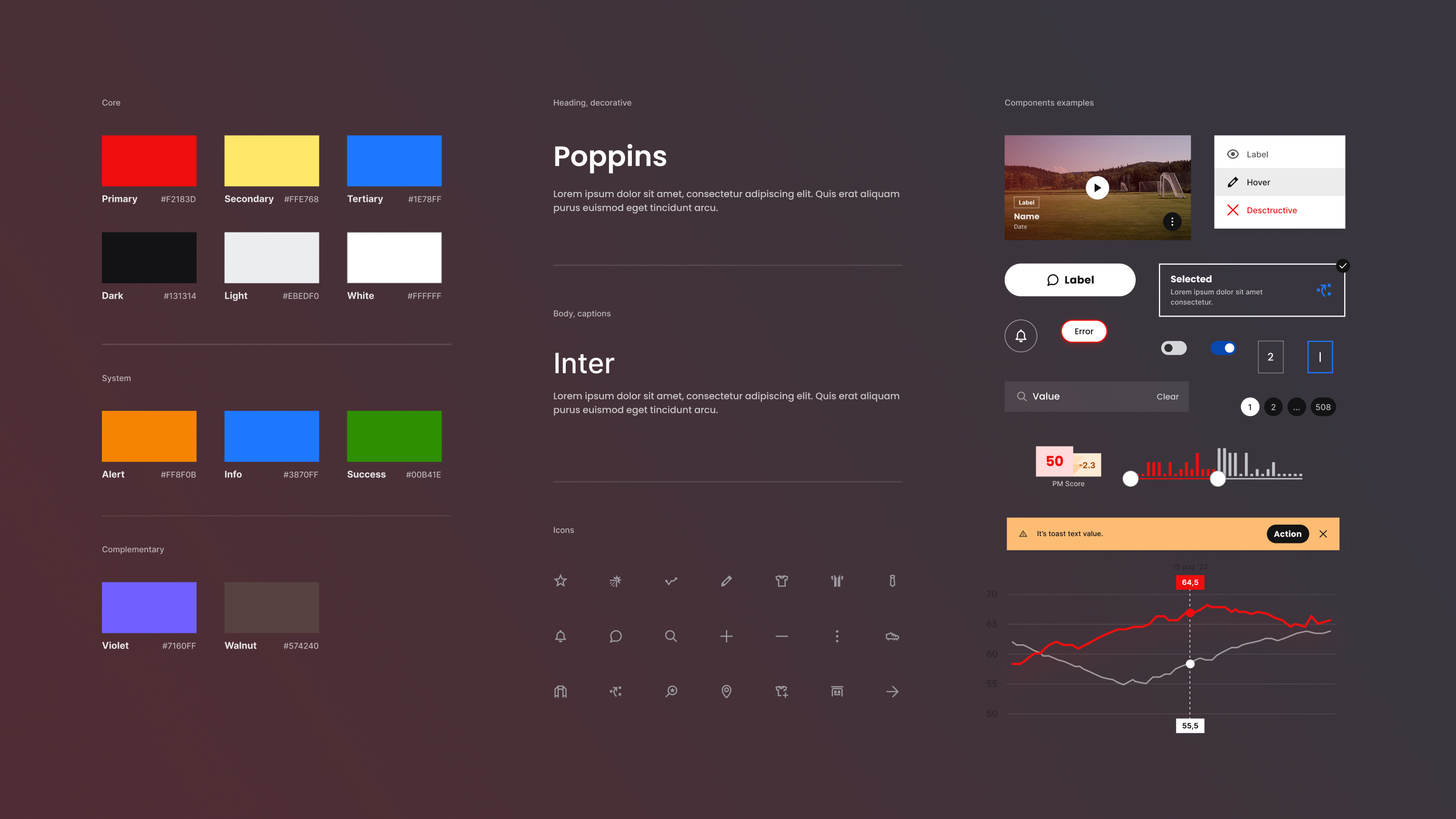
Redesigning the entire platform required a dedicated UI Kit from the start. Initially, it was a lightweight solution—a few rebranded color tokens, custom-made icons, basic illustrations, Lottie animations, and simple components, all with minimal documentation.
As the team grew and timelines tightened, we had to accelerate and streamline front-end processes:
- We extended the visual layer to the semantic level (using Tokens Studio in Figma), and synchronized design tokens via GitHub.
- We enriched component documentation with detailed descriptions, do’s and don’ts, and functional annotations.
- We focused on iterative work at the foundational level—building from components up, not just screens or views.
In my view, this marked the turning point—from a simple visual library to a true Design System approach. We defined our values, clarified where the product was heading, and began validating ideas before designing full views.
Conclusion
Working on Playmaker was a major challenge—full of ups and downs. But each fall brought a valuable lesson. With a live product, tight deadlines, and high goals, it tested my skills across design, time management, prioritization, and collaboration.
We unlocked new paths for user acquisition and monetization. Playmaker gained visibility in the market—rising from the bench and stepping confidently onto the pitch.
Whether you’re into football or not, drop by Playmaker and see what we’ve built. I bet you’ll be surprised. And if you’d like to know more—find me on LinkedIn. I’d love to talk.